On this page
Guide 10 of 11
Credits and Paying
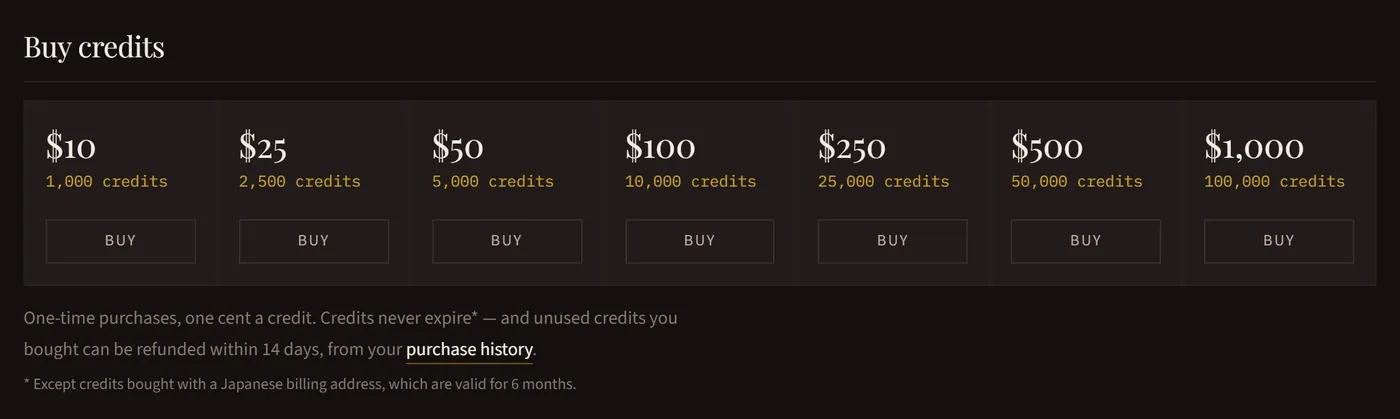
Roll & Cut is pay as you go. You buy credits when you need them, and each film uses credits as it’s made. One credit is one cent.
Buy credits
On Billing, press Add credits and pick an amount, from $10 to $1,000. Payments are handled by Link, part of Stripe, which emails you a receipt. Pricing shows what a typical minute of film costs.
They don’t expire
Credits you buy never expire, except those bought with a Japanese billing address, which last 6 months.
See the price before you start
The setup shows an estimate for the whole film, and Roll it shows the credits held to start, the estimate and your balance before anything begins.

Credits are set aside step by step
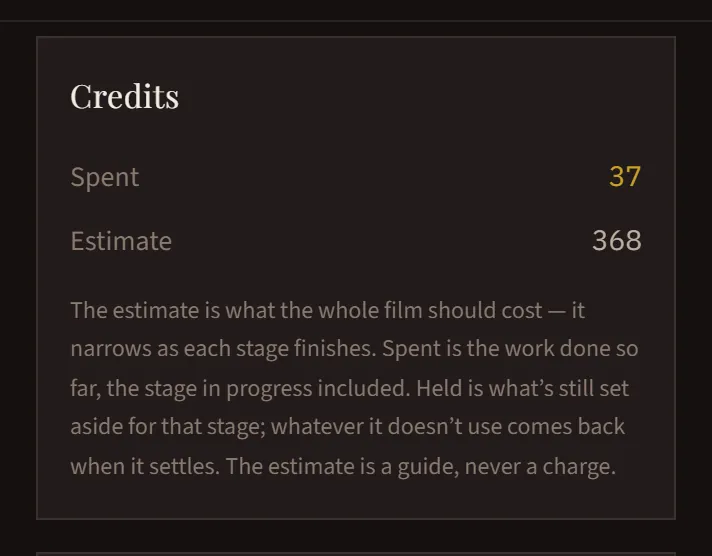
As the film is made, credits are set aside for each step just before it runs (held) and charged for what the step actually used (spent). Whatever a step doesn’t use comes back to your balance. The film’s page shows both as it goes.
If you run low
If your balance can’t cover the next step, the film pauses before it, and nothing made is lost. Add credits, open the film and press Continue. Paused or Stopped Films has more.
Auto-pay, if you like
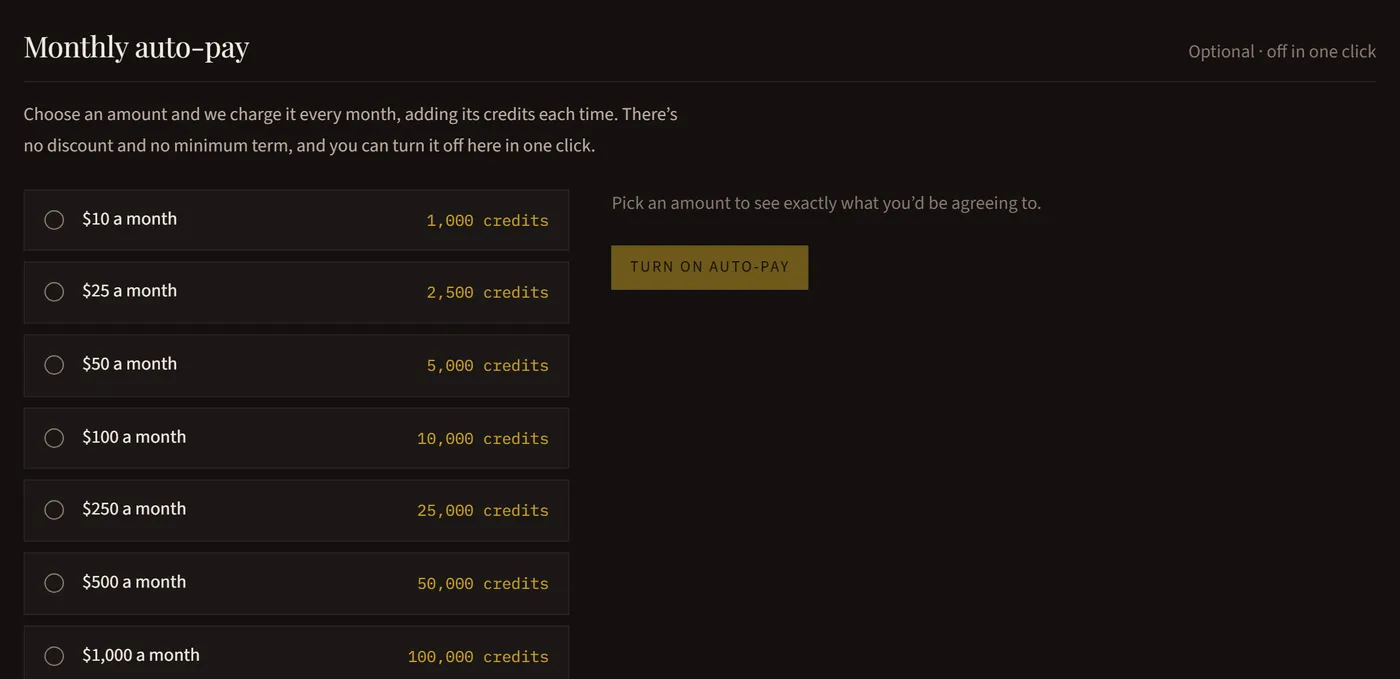
Monthly auto-pay charges the amount you choose every month and adds its credits. There’s no discount and no minimum term, and it turns off in one click on Billing.
Refunds
For 14 days after a purchase, you can have its unused credits refunded in full: press Refund unused credits on it in your purchase history. Refunds on request are once in 12 months. A film that fails through our fault costs nothing; its credits come back on their own. The refund policy has the details.
Stopping a film
You can stop a film from its page while it’s being made. You pay only for the work already done, and the rest comes back. A stopped film can’t be restarted.